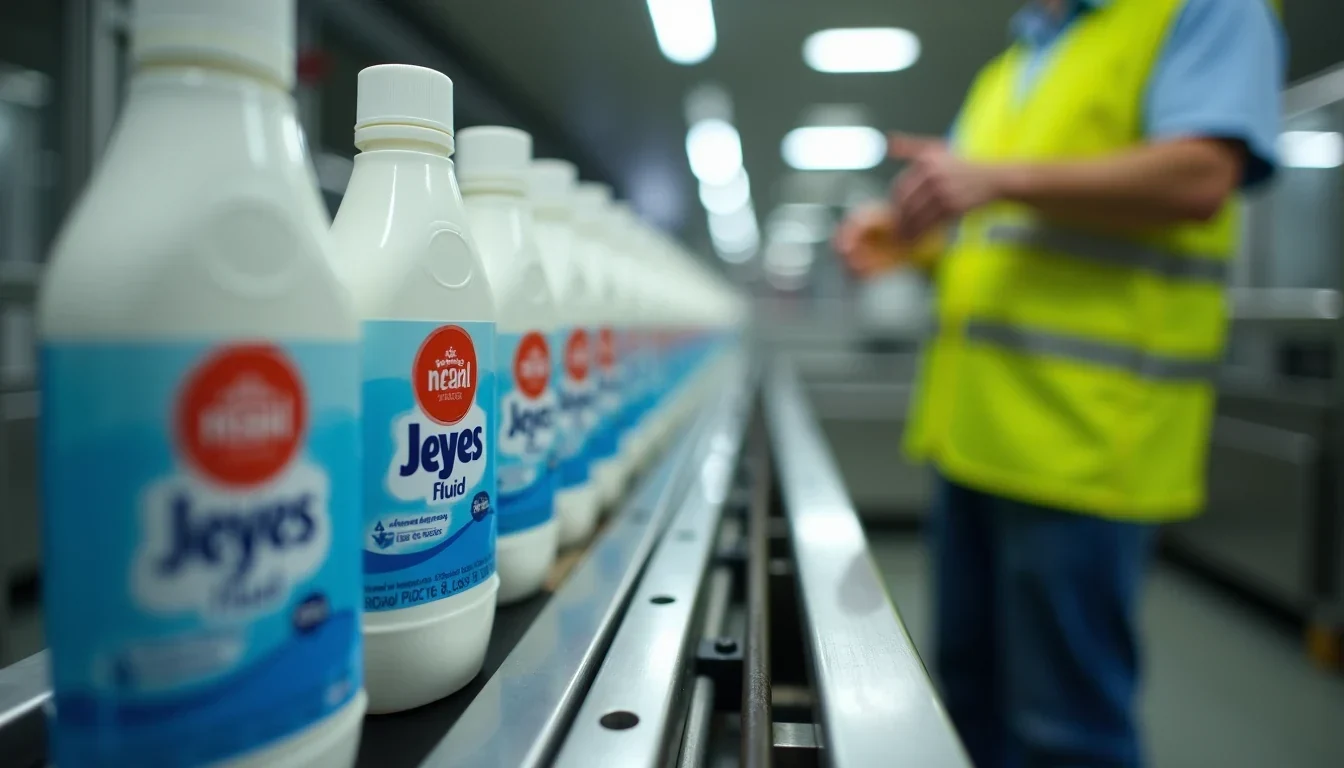
Tiger Brands has put R200 million into a Paarl factory, an operation old enough to distinguish a press release from a real bet. The money targets the company’s Home and Personal Care site, one of its older operations. The goal is industrial: new lines, more automation, better throughput, and a plant capable of feeding shelves with Doom, Peaceful Sleep, Jeyes Fluid, Ingram’s, and Purity without treating every disruption as a national emergency.
This kind of spending matters more than a typical corporate ribbon-cutting. Many firms discuss local commitment while sending critical operations offshore. A R200 million cheque into a working factory signals something different. It shows the owner wants capacity, control, and a physical footprint that still earns its keep. This is not charity; it is a decision about where power resides.
Why put R200 million into an old plant?
Companies often use old factories for press releases, avoiding the inconvenience of risk. Tiger Brands did the opposite. Paarl is not a greenfield fantasy. It is an existing site, one of the group’s older ones, being modernised with capital and machinery, not just slogans.
The logic is clear. A modernised plant produces more, wastes less, and reacts faster to demand shifts. If a household brand runs short on shelf stock, customers do not wait for a procurement committee to admire a balance sheet. They buy something else. For a company selling everyday staples and household products, market share leaks away, one unavailable pack at a time.
The investment targets Tiger Brands’ Home and Personal Care business. This means the factory produces items people notice when they disappear from cupboards or bathroom shelves. Doom, Peaceful Sleep, Jeyes Fluid, Ingram’s, and Purity are not niche labels. These brands appear in ordinary homes, school bags, supermarket aisles, and the boring but necessary parts of daily life. This is precisely why the capital matters. If the plant moves faster and produces more reliably, the company is not just improving a site in Paarl. It is protecting a distribution system that reaches deep into the country’s consumer economy.
What does the money buy in practice?
Machinery is the obvious part. The less glamorous part is the real point. New production lines and automation systems change a plant’s economics. A factory that once relied on more manual intervention can push through larger volumes with fewer bottlenecks. Output becomes steadier, quality control tighter, and downtime more expensive to ignore.
A cost story also hides within the capital spend. Companies do not modernise plants for the sake of capital expenditure. They do it because a better-running factory can lower unit costs over time. If the same brand can be made with fewer stoppages, less waste, and better energy use, the business has more room to absorb input shocks or defend price points. This is especially useful in a country where imported components, packaging, and chemicals can quickly become expensive when the rand wobbles.
Paarl also gives Tiger Brands a local base it can control. Supply chains look elegant in PowerPoint until a port slows down, freight costs jump, or a global shock turns a faraway supplier into a local headache. Domestic production does not solve everything, but it shortens the distance between management and the problem. When the plant is here, the consequences are here, which tends to sharpen decision-making.
Why would a consumer goods group do this now?
The last few years have exposed many lazy assumptions. Companies that built too much of their production logic around imports, long lead times, and cheap offshore sourcing learned a practical lesson in fragility. Global logistics work until they don’t. Currency volatility looks manageable until the invoice arrives, and then the margin story gets uglier.
Tiger Brands is not alone in noticing this. RCL Foods has invested in domestic food processing, and Aspen Pharmacare has done the same in pharmaceuticals. These are not identical businesses, but the direction is familiar. Local capacity is becoming less of a sentimental line and more of a defensive asset. Manufacturing closer to the market often allows for faster responses, protected supply, and fewer foreign moving parts in the cost base.
A political layer also exists. The state has urged firms to localise for years, partly through procurement rules, partly through industrial policy, and partly by rewarding companies that build things within the borders. The Department of Trade, Industry and Competition offers a menu of support tools, including manufacturing grants, energy-efficiency incentives, and broader industrial policy programmes. Paarl is not in a special economic zone, so this is not a tax-holiday story. It is a more ordinary, more revealing story about where firms choose to place capital when the state consistently pushes in the same direction.
What does this mean for jobs in Paarl?
Tiger Brands has not advertised a specific number of new direct jobs tied to this investment. This usually indicates a corporate announcement is more honest than theatrical. The company has spoken instead about keeping jobs stable and securing the plant’s future. The promise is less about a sudden hiring spree and more about protecting an existing payroll.
This should not be dismissed. In industrial towns, the difference between a modernised plant and one slowly being run down is everything. A factory that stays alive keeps technicians, operators, maintenance teams, logistics contractors, and local service providers in the game. Even without an immediate jump in headcount, the surrounding economy gains a steadier anchor.
The wider effect can exceed the headcount. More production means more demand for packaging, raw materials, transport, maintenance, cleaning, security, and assorted support services. None of these lines make for dramatic investor-relations copy, but they are the parts of manufacturing that spread income through a region. If the plant buys more locally where it can, the money circulates in the Western Cape instead of disappearing into an import invoice.
Who really believes in local expansion?
This is where the capital markets angle gets interesting. Many companies like the rhetoric of local manufacturing because it sounds patriotic and responsible without requiring much spending. Real commitment is different. Real commitment involves a factory floor, fixed equipment, maintenance costs, and a management team that must live with the asset for years.
Tiger Brands still faces an awkward question every major listed company encounters: Is local expansion a genuine strategy, or just a public-relations mood board? A R200 million upgrade does not settle the matter forever, but it does place a marker. The company is not treating domestic production as a relic to be tolerated. It is treating it as something worth reinforcing.
This also matters for investor confidence. Markets notice when a major JSE-listed company puts capital into productive assets instead of only discussing cost discipline and restructuring. It signals that management sees future cash flows in the local market and is willing to back that view with steel, wiring, and concrete. Equity investors tend to prefer businesses that can produce through shocks rather than merely explain them after the fact.
What is actually known and how do you check it?
What is known is straightforward. Tiger Brands has committed R200 million to its Paarl Home and Personal Care factory. The site makes brands such as Doom, Peaceful Sleep, Jeyes Fluid, Ingram’s, and Purity. The upgrade aims to modernise one of the group’s older plants, lift capacity, improve efficiency, and support the existing workforce. The company has framed the spend as part of a broader effort to strengthen local manufacturing and supply resilience.
What is not known, at least from the public announcement, is a clear tally of new jobs created. The story focuses on keeping the plant competitive and the supply chain intact, rather than flashing a new employment number. This distinction matters because corporate announcements often blur the difference between sustaining an industrial base and expanding employment outright.
The clearer way to interpret the move is to follow the capital. R200 million went into Paarl, not into a presentation deck, not into a vague commitment to the future, and not into some offshore shortcut that would make quarterly numbers look prettier. It went into a factory that turns everyday brands into something more durable: a local asset with a longer life.
So should more companies do this?
Yes, and not out of sentimentality. Companies should invest more in local manufacturing when the economics justify it, because domestic capacity is a form of power. It keeps more of the value chain inside the country, reduces dependence on fragile external links, and gives firms a better chance of controlling their own supply. The companies that understand this will appear boring in the best possible way: they will own plants, hire people, train operators, and move capital into things that can actually produce.
The ones that do not will keep talking about resilience while renting it from somewhere else.